
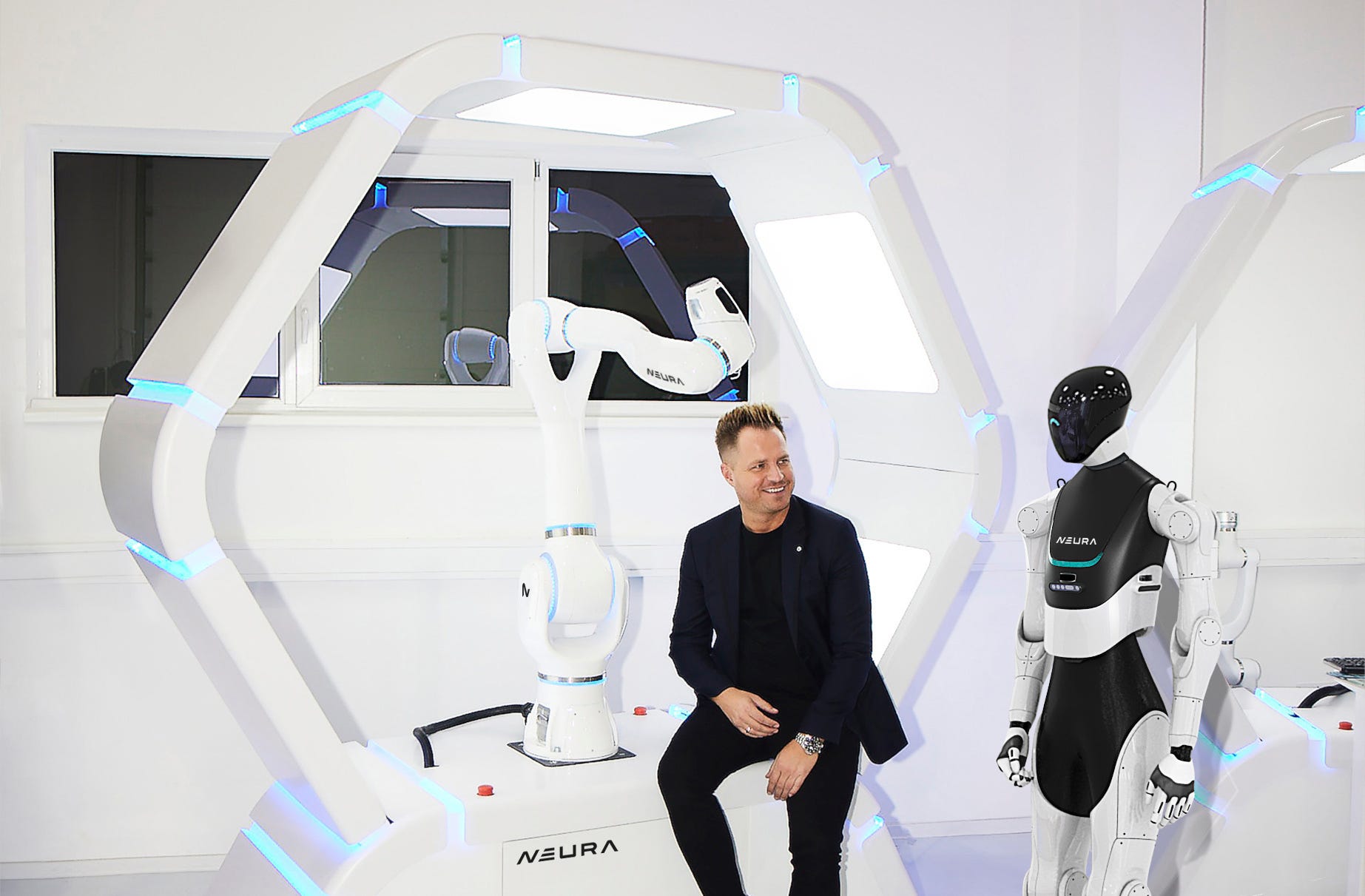
Despite rapid advances in robotics, AI, and analytics, a majority of factories are only semi-automated at best. Adoption barriers often stem not from scepticism about technology itself, but from grounded business realities. Manufacturers remain cautious about automation largely because the business case is more complex than the technology pitch.
For many, automation is a strategic decision that must align with existing capital cycles, workforce readiness, and operational risk tolerances. The following five factors explain why even efficiency-driven manufacturers continue to move cautiously.
1. High capital intensity and total cost of ownership
Automation still shows up as a big line item rather than an operating tweak. Beyond the sticker price of robots, AMRs, conveyors, and vision systems, manufacturers must fund safety enclosures, upgrades to PLCs (programmable logic controllers), network infrastructure, and integration engineering that can easily double project costs.
For SMEs, this clashes with thin margins and conservative lending, especially in cyclical sectors like automotive or construction materials. Even where financing is available, boards now expect robust payback within two to three years, not open-ended “strategic” investments.
Warehouses face similar dynamics: integrating ASRS (automated storage and retrieval systems) or AMRs (autonomous mobile robots) into brownfield facilities means retrofitting racking, conveyors, and WMS (warehouse management system) interfaces, which pushes total cost of ownership far beyond brochure estimates. As a result, many operators default to incremental investments — low-cost sensors, semi-automated work cells, or leasing models — rather than committing to fully robotic lines.
2. Integration headaches with legacy infrastructure
Most factories are not greenfield “lights-out” showcases but a patchwork of older CNCs, bespoke fixtures, and partially digitalized lines. Connecting new robots, AGVs, and vision systems into this environment often requires custom mechanical design, nonstandard I/O mapping, and middleware to bridge incompatible protocols.
Integration firms report that for complex lines, engineering and commissioning can exceed the hardware cost, especially when you add parts presentation systems, safety redesign, and line balancing. Downtime is another deterrent: taking a profitable line offline for weeks to reconfigure conveyors, change layouts, and debug PLC logic is a hard sell to operations leaders.
In warehouses, AMR and shuttle deployments must sync reliably with existing WMS and ERP stacks, which often lack clean APIs or real-time inventory accuracy. These integration challenges are amplified in multi-site rollouts, where each plant has unique legacy equipment and tribal process knowledge.
3. Workforce resistance and skills constraints
Automation is as much an organizational change program as a technology investment. Yet many manufacturers underestimate the cultural and skills transformation required to move from manual or semi-automated workflows to robot-centered operations.
Operators and supervisors worry, often legitimately, that new systems will reduce headcount, compress overtime, or shift power toward central engineering. Surveys show sizeable pockets of employees who fear job displacement or lack confidence in their ability to master programming, troubleshooting, or data-driven decision-making.
Unions can slow approvals until retraining commitments, redeployment paths, and safety assurances are codified. At the same time, there is a chronic shortage of technicians and engineers who can design, maintain, and optimize robotic cells, particularly in smaller regional markets.
This creates a double bind: plants need skilled people to deploy automation, but they are pursuing automation partly because they cannot hire enough skilled people. Without deliberate communication, inclusive planning, and funded upskilling programs, resistance at the shop-floor level frequently converts strategic enthusiasm into stalled pilots or half-implemented systems.
4. ROI uncertainty in volatile, high-mix environments
On PowerPoint, automation RoI looks straightforward: higher throughput, fewer defects, lower labor cost. On the plant floor, the math gets messy. Demand volatility, SKU proliferation, and frequent engineering changes mean robots are rarely running the same process, at the same volume, for long stretches of time.
In high-mix, low-volume environments — common in job shops, contract manufacturing, and specialty warehouses — reprogramming robots, redesigning grippers, or reconfiguring ASRS logic can erode gains and extend payback timelines well beyond initial projections. Executives also factor in hidden costs: performance ramp-up, debugging, training, spare parts, software subscriptions, and cybersecurity.
Many report past experiences where early automation projects under-delivered, creating institutional skepticism about vendor ROI claims. Warehouse operators, likewise, worry about committing to systems that may not flex easily with omnichannel peaks, seasonal promotions, or changes in packaging and order profiles. In this context, maintaining human-driven flexibility can feel pragmatic.
5. Reliability, serviceability, and operational risk
For plant managers accountable to uptime KPIs, automation introduces a new class of single points of failure. A stalled palletizing robot, misaligned vision sensor, or frozen WCS (warehouse control system) can halt an entire line or warehouse zone, with cascading impacts on delivery SLAs.
In many regions, especially outside major industrial hubs, access to certified service technicians and rapid-response support is limited, extending mean time to repair when issues arise. Even with remote diagnostics, plants often need on-site intervention for mechanical failures, safety interlock problems, or PLC-level bugs.
Predictive maintenance, digital twins, and real-time monitoring promise better resilience, but these tools themselves require data quality, integration, and specialized skills that many mid-market manufacturers are still building. Past experiences with brittle automation — systems that function well only under ideal conditions and fail unpredictably under dust, temperature swings, or product variation — reinforce caution.