
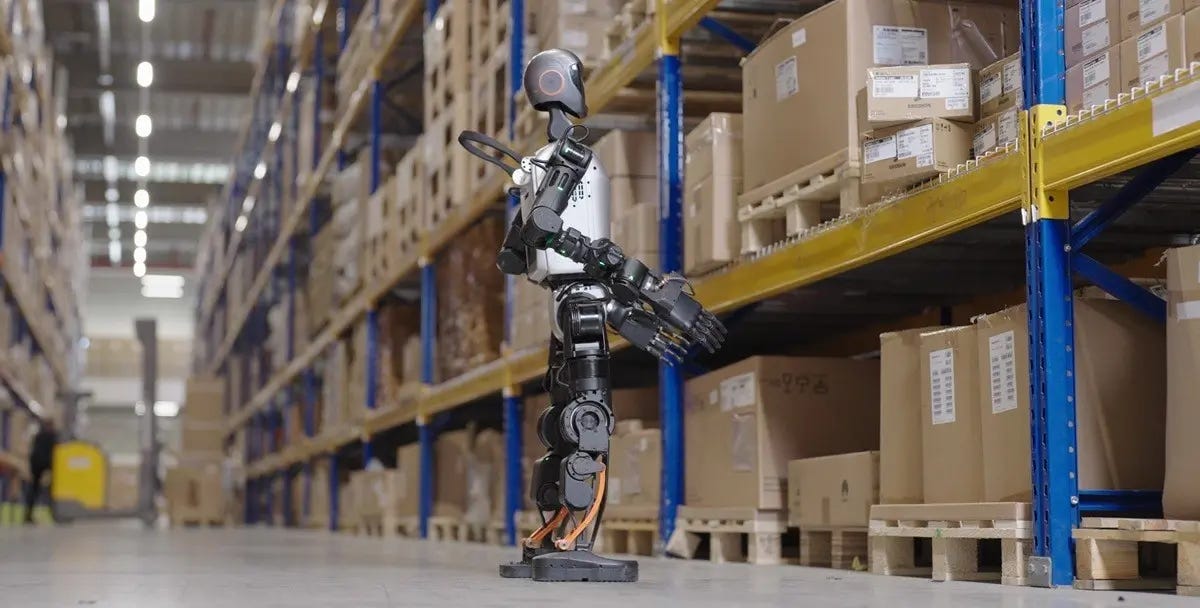
Accenture, Vodafone Procure & Connect and SAP are testing whether humanoid robots can do more than theatrically mimic human labour on a trade-show floor. In a warehouse in Duisburg, Germany, the partners say they have shown that physical AI can help spot safety risks, inspection failures and idle space with real-time reporting into SAP’s warehouse system.
The pilot matters because warehouse automation is moving from fixed machinery to systems that can observe, decide and act in less structured environments. That is a broader shift in industrial technology: firms want robots that can work beside people, use enterprise data and justify themselves not just as labour substitutes, but as tools for safety, compliance and operational control.
Against that backdrop, the partners are presenting the work at Hannover Messe 2026, where industrial software, robotics and supply-chain automation increasingly overlap. The appeal is not just cost-cutting, but the prospect of a new operating model in which physical AI feeds live data back into business systems and, eventually, into new services.
“Trained in digital twins and powered by physical AI, humanoid robots can reduce worker injuries and other warehouse safety incidents and lower overtime costs and the dependency on temporary labor,” Christian Souche, Accenture’s advanced robotics lead, said in a press release.
The pilot used humanoid robots at Vodafone Procure & Connect’s warehouse to carry out visual inspections through SAP Extended Warehouse Management. According to the release, the robots detected misplaced or damaged products, checked pallet stacking and weight distribution, identified unused storage space and flagged hazards such as obstacles in aisles or misaligned pallets.
SAP handled the integration with the warehouse management system, while Accenture built the robot intelligence and operating framework. The companies did not present this as a finished commercial product, but as a proving ground for a future “humanoid workforce” model that could be scaled if the economics and reliability hold up.
The humanoid robots used in the pilot are powered by Accenture’s Robot Brain solution. They are trained in digital twins of warehouse environments, built on Accenture’s Physical AI Orchestrator, which uses NVIDIA Omniverse libraries, the Mega NVIDIA Omniverse Blueprint and the NVIDIA Metropolis libraries and Blueprint for video search and summarization for the deployment of visual AI agents.
Vodafone’s logistics chief, Reinhard Stefan Plaza Bartsch, said the pilot was meant to explore “how humanoid robotics can improve efficiency, safety and operational visibility” and to clarify how such capabilities might scale across the supply chain. That is a sober ambition, and a sensible one: warehouses are where the promises of embodied AI will be judged by productivity, not by spectacle.