
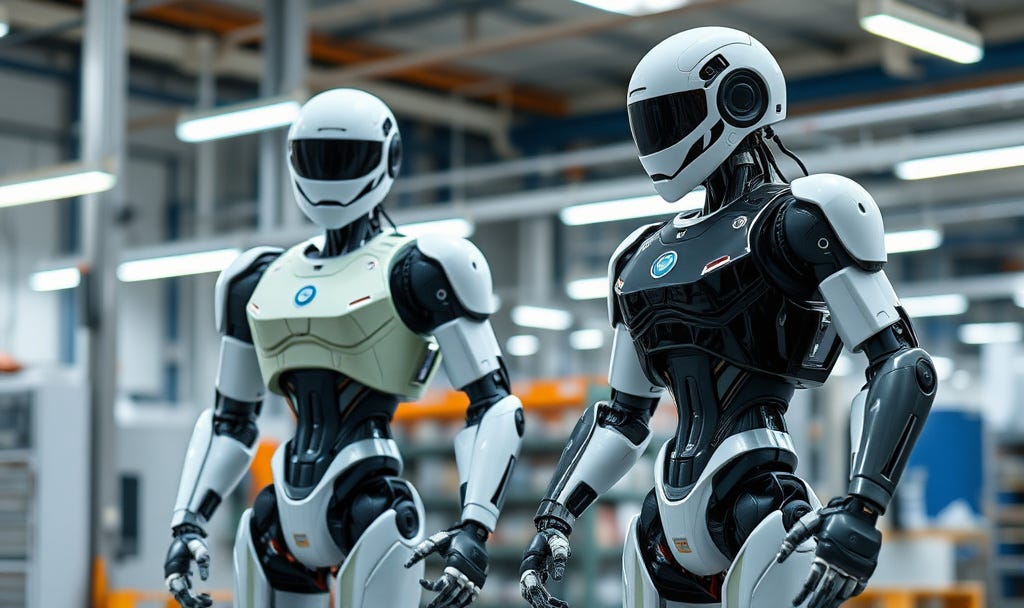
China’s robots may yet prove less a novelty than a policy tool, according to Morgan Stanley. Analysts at the investment bank predict that robots, and especially humanoids, could help extend the China’s grip on manufacturing, just as electric vehicles did starting about a decade ago.
The bank’s latest note, led by its Chief Economist in Asia, Chetan Ahya, argues that humanoids and other robots will become a key driver of China’s export machine over the next five to 10 years. It repeated its forecast that China’s share of global exports will rise from 15 percent now to 16.5 percent by 2030.
The analysts also said Chinese makers already account for roughly 90 percent of the 13,000 to 16,000 humanoid robots shipped globally last year, with the US and Japan still mostly at prototype stage. China’s annual humanoid sales, they said, could more than double to about 28,000 units this year, more than any other economy.
The bigger story is not about one country’s robot tally, but about industrial policy in an age of tightening supply chains and slower growth. Across the world, governments are treating automation as a strategic asset: a way to offset labour shortages, preserve export competitiveness and defend manufacturing share. China has gone further than most, folding embodied AI and advanced automation into its broader push for “future industries.”
The analysts from Morgan Stanley said, “looking ahead, humanoids and robots will be the next key driver of China’s export machinery over the coming 5 to 10 years.” It added that the industry’s development echoes the rise of electric vehicles a decade ago.
Morgan Stanley’s case rests on scale, state support and a supply chain that already dominates many core components. In its broader humanoid research, published last year, the bank estimated the market could reach $5 trillion by 2050 and said China could have 302.3 million humanoids in use by then, the most of any country. It also warned that the technology remains expensive, imperfect and years away from mass household adoption.
That caution matters. The report is bullish on China’s industrial advantage, but it does not claim humanoids will transform factories overnight. For now, the more immediate lesson is that Beijing appears determined to use robots to deepen an old strength rather than invent a new one. In that sense, the bet is less on science fiction than on familiar industrial discipline, aided by cheap production, abundant suppliers and a state willing to back winners.