
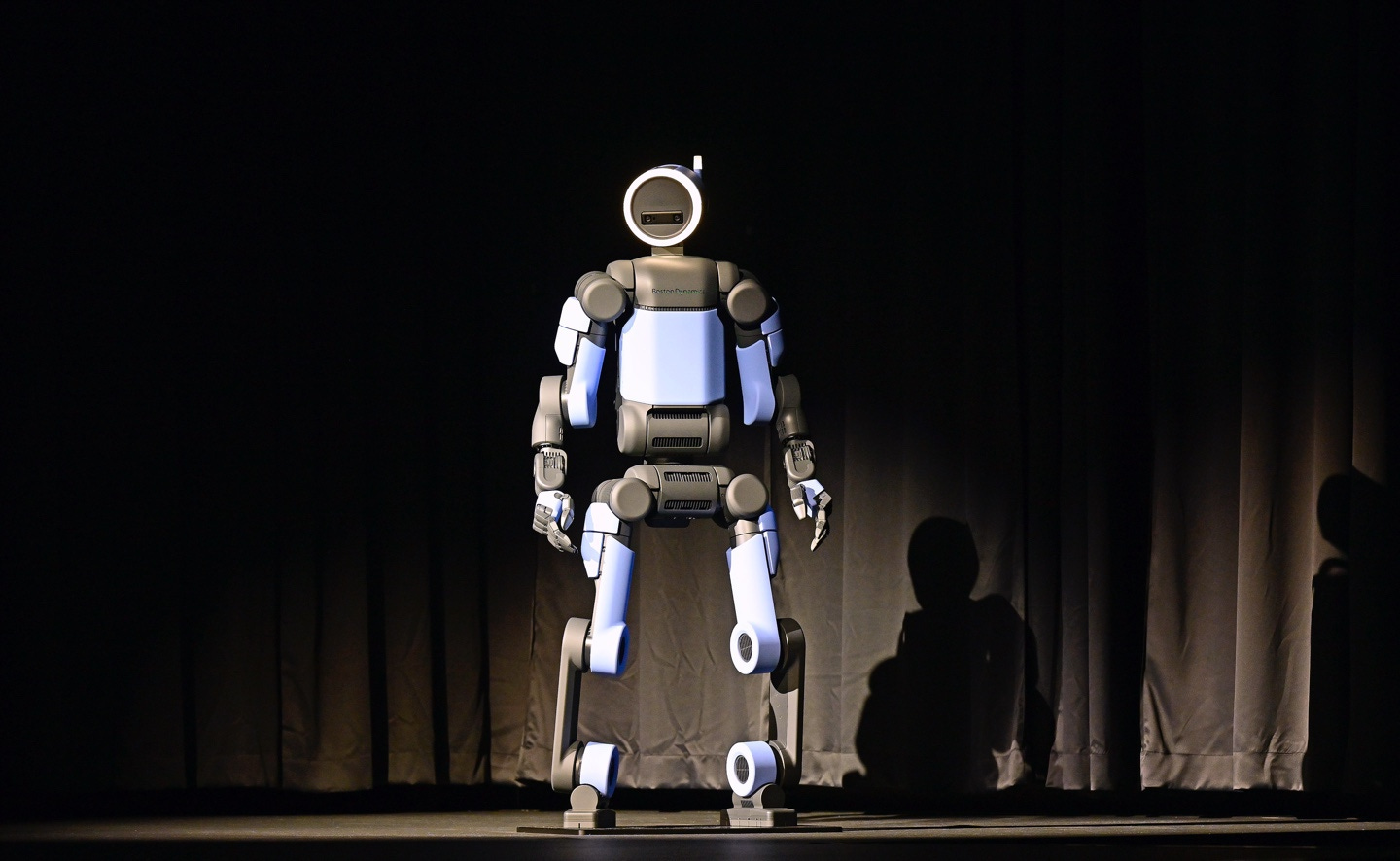
Hyundai Motor Group used the glare of CES 2026 to recast itself not just as a carmaker dabbling in robots, but as an architect of a Physical AI economy built on humanoids, co-working machines and data-rich factories. Under the banner “Partnering Human Progress”, the South Korean group laid out a robotics strategy that stretches from industrial cobots on today’s shop floors to Atlas humanoids mass-produced by the end of the decade.
The initiative rests on three pillars: putting robots alongside workers in hazardous and repetitive tasks; wiring the group’s far-flung value chain into an end-to-end robotics platform; and enlisting leading AI labs to supply the brains for increasingly capable machines.
The company is also planning a Physical AI Application Centre and a dedicated robot manufacturing and foundry plant, signalling that robots are moving from side project to core industrial franchise.
The push comes as global manufacturers race to convert decades of automation into fleets of adaptive machines that can see, reason and learn from the physical world, rather than simply repeat pre-programmed motions. From smart factories in Asia to logistics hubs in America and Europe, a new contest is emerging over who can turn proprietary data, AI models and hardware scale into defensible positions in “physical AI” – the layer where software meets gears, actuators and balance.
For carmakers like Hyundai, the wager is that control of both the robots and the factories they inhabit will be as strategic in the 2030s as control of the combustion engine was in the 20th century.
“The convergence of robotics and AI represents more than a technological advancement. It is a transformative innovation that will make human life safer and more enriching,” said Zachary Jackowski, vice president and general manager of Atlas at Boston Dynamics, Hyundai’s robotics subsidiary. “By combining capabilities of Boston Dynamics and Google DeepMind through this strategic partnership, we are taking a significant step toward redefining the future paradigm of the industry.”
Hyundai has already put Boston Dynamics’ robots to work, turning the company’s once-viral machines into earnest factory hands. Spot, the four-legged inspection robot, now operates in more than 40 countries, collecting data and monitoring safety in industrial sites, while Stretch, a warehouse robot launched in 2023, has unloaded more than 20 million boxes under harsh conditions. Those deployments, Hyundai argues, are proof that its robots can graduate from spectacle to scaled infrastructure.

The more audacious bet lies with Atlas, the humanoid platform that Hyundai expects to become the largest segment of the Physical AI market. The group plans to integrate Atlas into plants such as Hyundai Motor Group Metaplant America in Savannah, Georgia, before rolling it across the network once safety and quality gains are proven.
From 2028 the humanoids are due to take on tasks like parts sequencing; by 2030 the remit extends to component assembly, repetitive motions and heavy lifting, with the long-term goal of saturating entire production sites.
To support that rollout, Hyundai is constructing what it calls a Group Value Network, effectively an end-to-end AI robotics value chain built on its automotive production infrastructure, safety know-how and affiliates’ technologies. Within this framework the company aims by 2028 to reach a scalable system capable of turning out around 30,000 robots a year, a volume it claims will put the production version of Atlas ahead of any other enterprise-grade humanoid. The same supply chain that underpins electric vehicles and batteries is meant to give the group a cost and integration edge in robots too.
The strategy also leans heavily on software, particularly AI models adapted from software-defined vehicles to robots and other physical AI products. By digitising data from manufacturing, logistics and sales, Hyundai wants a virtuous circle in which robots constantly refine their behaviour and, in turn, generate richer data for training. The Physical AI Application Centre is pitched as the hub for this loop, curating use cases and feeding improvements back into both product design and factory deployment.
Hyundai’s ambitions are reinforced by a high-profile alliance between Boston Dynamics and Google DeepMind to accelerate next-generation humanoid development. DeepMind’s Gemini Robotics foundation models, built on its large multimodal Gemini system, are designed to let robots perceive, reason, use tools and interact more naturally with humans, regardless of form factor. Together, the partners aim to develop AI controllers for complex robots performing high-impact tasks, while stressing that any scaling of robot adoption must be done safely and efficiently.
On the show floor in Las Vegas, Hyundai is keen to demonstrate that this is more than a slide-deck strategy. Its booth at the Las Vegas Convention Centre features live demonstrations of Spot, Stretch and Atlas alongside in-house creations such as the X-ble Shoulder, an automatic charging robot and MobED, a mobile eccentric droid that has already won a CES 2026 Best of Innovation award. Motional’s Ioniq 5 robotaxi and Hyundai WIA’s autonomous mobile, collaborative and parking robots round out a line-up meant to show robots embedded in both everyday life and industrial workflows.
The group’s messaging stresses “human-centred automation”, with people remaining in control even as robots take on more of the dirty, dull and dangerous work. In Hyundai’s telling, factory workers graduate from manual labour to training and supervising robotic colleagues, while the broader ecosystem shifts towards large-scale robot commercialisation across sectors beyond mobility. If the plan works, the company will not just sell cars and robotaxis, but lease out legions of embodied AI systems that move, lift and watch on behalf of clients worldwide.